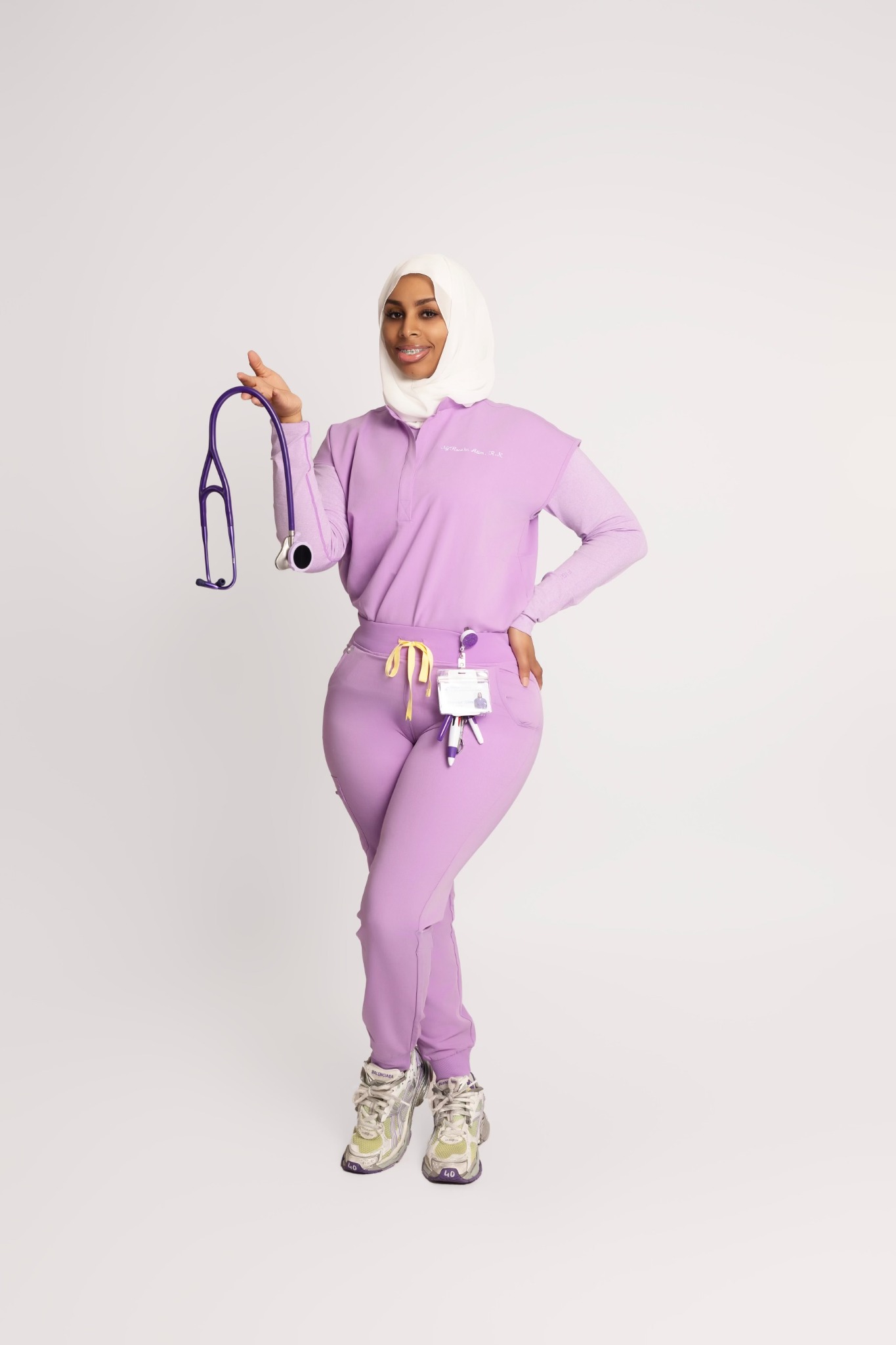
Personal Nursing Philosophy
Ny’Rossha Alim, R.N.
Delaware Technical Community College
NUR 300-201 RN to BSN Transition
September 29, 2026
Personal Nursing Philosophy
My nursing philosophy is to care for the whole person with dignity, compassion, clinical judgment, and the courage to advocate when something is wrong. I want patients to feel heard and respected, no matter their background, diagnosis, or circumstances. I also believe that caring well requires nurses to keep learning, protect their own well-being, communicate through conflict, use evidence, and help others grow. These beliefs came from my experience as a certified nursing assistant (CNA), licensed practical nurse (LPN), unit manager, house supervisor, and now a registered nurse (RN). I chose Patricia Benner’s Novice to Expert Model because it helps me understand how experience, reflection, and support have changed my practice and how I can continue to develop (Yu et al., 2024). It is the thread connecting what I learned in NUR 300 to the nurse I want to become.
Nursing Theory and My Values
Yu et al. (2024) describe Benner’s model as five stages of nursing development: novice, advanced beginner, competent, proficient, and expert. The model explains that a nurse learns to recognize the meaning of a situation through experience, not only by memorizing rules. I do not see these stages as permanent titles. A nurse may be confident in one role and need guidance in a new specialty or responsibility. As a CNA, I learned to notice when a resident was not acting like themselves and to report what I saw. As an LPN, I had to organize care for many residents, make decisions within my role, and communicate changes promptly. In leadership, I learned that my decisions also affect staff, families, and the safety of an entire unit. Becoming an RN gave me a new scope of practice and new expectations. I brought experience with me, but I still had to remain teachable.
The part of Benner’s model that speaks to me most is that growth comes from making sense of real patient situations. Experience alone is not enough if I never stop to ask what I missed or how I could improve. When I encounter a change in condition, I consider what is different from the person’s usual baseline, what information I still need, and whom I should involve. I believe nursing knowledge must be paired with humility. I can acknowledge what I know, ask for help with what I do not know, and still speak firmly when a patient needs an advocate. That balance between confidence and openness is the foundation of my philosophy.
Lifelong Learning
To me, lifelong learning goes beyond collecting degrees. I became a mother at sixteen and entered healthcare at eighteen. I learned persistence, responsibility, and how to keep moving toward a goal while caring for my children. Those lessons did not replace formal education, but they shaped how I approached it. Moving from CNA to LPN and then RN showed me that every step brings knowledge I did not have before. Pursuing my BSN is another choice to grow rather than assume that earning my RN license means I am finished. My long-term goal of becoming a psychiatric mental health nurse practitioner also requires me to keep studying and listening to people whose experiences differ from mine.
Benner’s theory keeps me honest about learning. Even after years in long-term care and rehabilitation, I may be an advanced beginner in a new clinical setting. I should not let a job title or prior success make me reluctant to ask a question. In my BSN courses, I want to strengthen my understanding of research, community health, leadership, and the reasons behind clinical decisions. I will use continuing education, feedback from colleagues, and reflection after difficult shifts to identify gaps. When a newer nurse asks me for help, I want to share the reasoning behind a decision, not just tell them what task to complete. That is how I can support their growth while continuing my own.
Lifelong Learning Plan
I want my commitment to learning to show up in a plan I can actually follow. During each BSN semester, I will set aside weekly study time, keep track of assignments and feedback, and choose one course idea to apply or discuss in practice. At the end of each course, I will write a short reflection about a skill I strengthened, a question I still have, and one change I will make in patient care or leadership. I will ask an instructor, mentor, or experienced colleague for feedback at least once each term. This gives me a way to see progress beyond a grade. Benner’s model reminds me to identify where I am still new to a skill, practice it with support, and return to it after I have more experience (Yu et al., 2024).
After earning my BSN, I plan to continue relevant nursing education, review current evidence and facility policies, and seek learning opportunities in mental health as I prepare for a PMHNP program. At work, I can bring a question from a fall huddle, wound round, or difficult handoff to a trusted evidence-based source and share what I learn with the team. I will revisit my goals every few months and change them when my role or patients’ needs change. If I struggle with a new responsibility, I will seek coaching instead of hiding the gap. My goal is to become more capable over time while remembering that a new setting can make even an experienced nurse a learner again.
Personal Wellness
I believe a nurse’s well-being affects how present and attentive that nurse can be with patients. As a mother of three, an RN, and a student, I know how easy it is to put rest, meals, movement, and relationships last. My personal wellness plan asks me to make realistic time for sleep, physical activity, healthy meals, family, and supportive relationships. I also need to recognize when stress is building instead of carrying everything until I am exhausted. The American Nurses Association (2025) recognizes nurses’ moral duties to themselves, including health, safety, integrity, and professional competence. That supports my belief that taking care of myself is part of responsible practice.
My faith as a Muslim is an important part of my wellness. Praying Salah five times a day helps me slow down, reflect, and stay connected to my values, although work, school, and motherhood can make consistency difficult. I want to plan around prayer as intentionally as I plan around other commitments, while giving myself room to improve instead of expecting perfection. Benner’s model reminds me that self-awareness also develops through experience. I have learned that always pushing through fatigue is not the same as being capable. I want to notice my limits, ask for support, and set boundaries so I can think clearly and be fully present for patients. As I work toward mental health nursing, I also want to practice the coping and self-awareness that I will encourage in others.
Conflict Management
My first instinct during conflict is usually to listen, stay calm, and avoid making the situation more tense. That can help others feel heard, but it can also become a weakness if I stay quiet when I disagree. In a previous reflection, I recognized that I sometimes worry about being seen as too assertive, especially as a young Black woman in leadership. My philosophy is that kindness and directness can exist together. A patient should not have to wait for safe care because I am uncomfortable speaking up. Benner’s theory helps me see conflict management as a clinical skill that develops with practice. A nurse who has learned to recognize a concerning pattern must also be able to explain it clearly and persist when the first response does not address it.
One situation from long-term care stays with me. A resident became unusually tired and short of breath, with a low oxygen level and an elevated heart rate. A nurse and I believed the resident needed emergency evaluation, while another leader preferred more monitoring because the resident had recently returned from the hospital. I reviewed the vital signs, change from baseline, and interventions already attempted, then gave the provider a focused report. The provider ordered a transfer, and the resident was later admitted. I learned that stating objective facts and a clear recommendation can move a disagreement toward a safer decision without attacking the other person. I will continue using SBAR to organize urgent communication, listening to the reasons behind another perspective, and using the chain of command when a safety concern remains unresolved. TeamSTEPPS identifies SBAR and the Two-Challenge Rule as tools to support clear communication and speaking up for patients (Agency for Healthcare Research and Quality [AHRQ], 2024).
QSEN Competencies
The six Quality and Safety Education for Nurses (QSEN) competencies are patient-centered care, teamwork and collaboration, evidence-based practice, quality improvement, safety, and informatics (AlRatrout et al., 2025). They fit my philosophy because a nurse cannot provide safe, respectful care by treating these as separate checkboxes. Benner’s model gives me a way to understand how they become part of everyday judgment. With practice, I should notice the person behind a diagnosis, anticipate which team members are needed, question an outdated routine, and recognize when the system itself needs to change.
Patient-centered care begins with listening. In long-term care, a resident’s family, beliefs, finances, or fears can shape what care is possible. I want to ask what matters to the person and explain options in a way they can understand. Teamwork means sharing relevant changes with nursing assistants, providers, therapy, social work, and families, while respecting each person’s role. Evidence-based practice means checking current research and policies instead of doing something only because it is familiar. As my experience grows, Benner’s theory challenges me to combine that evidence with the individual patient’s situation rather than assume the same plan fits everyone.
Quality improvement is familiar to me from audits, incident reviews, fall huddles, and QAPI work. If several residents fall at the same time of day, I want the team to examine the pattern and test a practical change, not only complete reports. Safety includes recognizing changes from baseline, preventing infection, checking medications and allergies, and escalating concerns. Informatics supports these decisions when vital signs, medication records, and notes are accurate and available to the team. I have used electronic records and reports in leadership, but technology should never replace looking at the patient and having a direct conversation. A developing nurse learns to connect all six competencies to the situation in front of them; an experienced nurse also helps the team make those connections.
Leadership
I have learned that leadership is not limited to a title. As a charge nurse, unit manager, and house supervisor, I have helped coordinate staffing, delegate care, follow up on changes, educate staff, and prepare for surveys. The hardest part is often balancing many needs while remembering that each decision affects a real person. My leadership values are fairness, accountability, clear communication, and advocacy. I want team members to be comfortable bringing me a concern early, including a new nurse who is unsure of their judgment. Benner’s model reminds me that support should fit a person’s experience: a novice may need clear guidance and a chance to practice, while an experienced nurse may need room to explain a pattern they have recognized.
I also need to keep developing as a leader. I have sometimes taken on too much or hesitated to explain my strengths. I want to delegate with clear expectations, check back, give useful feedback, and admit when I need another perspective. When conflict arises, I should focus on patient facts and a shared plan instead of personality or authority. When a mistake occurs, I want to examine the conditions that allowed it and help improve the process while still holding myself and others accountable. The QSEN emphasis on teamwork, quality improvement, and safety supports the kind of leader I hope to be (AlRatrout et al., 2025). My future goal of becoming a psychiatric mental health nurse practitioner makes this even more important: patients need a clinician who can listen without judgment and lead collaborative care.
Conclusion
My personal nursing philosophy is to care for people with dignity, compassion, sound judgment, and a willingness to act when they need an advocate. Benner’s Novice to Expert Model helps me understand that becoming the nurse I want to be is an ongoing process. I will keep learning as my roles change, care for my own physical and emotional health, speak clearly through conflict, use the QSEN competencies to improve care, and help colleagues develop their judgment. My journey from CNA to RN has taught me that experience matters most when I reflect on it and use it to serve patients better. As I continue through the BSN program and toward my PMHNP goal, I want patients and coworkers to know that I will listen, remain teachable, and take responsibility for the care I give.
References
Agency for Healthcare Research and Quality. (2024). TeamSTEPPS tools. https://www.ahrq.gov/teamstepps-program/resources/modules/index.html
AlRatrout, S., Abu Khader, I., ALBashtawy, M., Asia, M., Alkhawaldeh, A., & Bani Hani, S. (2025). The impact of the Quality and Safety Education (QSEN) program on the knowledge, skills, and attitudes of junior nurses. PLOS ONE, 20(1), e0317448. https://doi.org/10.1371/journal.pone.0317448
American Nurses Association. (2025). Code of ethics for nurses: Provision 5. https://codeofethics.ana.org/provision-5
Yu, H., Chen, Y., Wu, L., Wang, L., Lai, Y., & You, A. (2024). Construction and implement of hierarchical management system for specialist nurses based on Patricia Benner’s theory. Frontiers in Medicine, 11, 1472384. https://doi.org/10.3389/fmed.2024.1472384